


Is it Necessary to Have a Sleeve and a Case for MacBook Pro?
Updated - August 2026
In 1998, we designed the first case ever made specifically for an Apple computer. Our second product was a sleeve for the PowerBook and it was unlike anything else on the market at the time. Every other sleeve used a zipper. We didn't. We used a hook-and-loop closure system that eliminated the zipper entirely, along with the scratching, snagging, and eventual failure that came with it. The new materials and construction method we chose were equally unconventional. Those early designs established the design philosophy we've followed for 26 years: solve the actual problem, don't copy what everyone else is doing.
When we decided to enter the hard-shell MacBook case market, we only did so when we had a solution that solved all the problems that plagued the designs that existed. The question of whether you need a MacBook Pro sleeve, a MacBook Pro case, or both for your Apple laptop comes down to two things: the environment you're moving through and how you work when you get there. We've been answering that question for customers since 1998. Here's how to think about it.
Watch How This Cutting Edge MacBook Pro Case Works
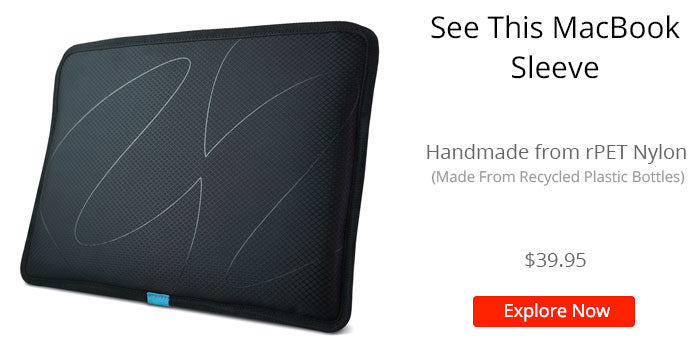
What a MacBook Sleeve Actually Does
The job of a MacBook Pro sleeve is to protect your Apple laptop during transit inside a bag, between locations, or anywhere the laptop isn't in active use. What separates a well-designed sleeve from a generic one is how it handles the specific failure points that most sleeves never address.
Our sleeves are available in rPET nylon made from recycled water bottles and backed by a 10-year warranty, and in Premium Leather, full or top-grain, vegetable-tanned, not bonded or vegan, backed by a lifetime warranty. Both materials are chosen because they last, not because they're cheap to produce.
What a MacBook Case Actually Does
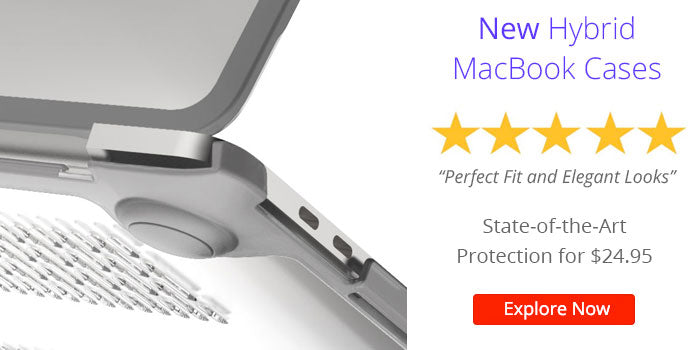
A clip-on case does something a sleeve can't: it stays on the MacBook Pro during use. That means protection against the drops, spills, and impacts that happen while you're working not just while you're moving. Most hardshell cases are single-material polycarbonate. They're rigid, which is good for impact resistance, but the hard plastic tabs that contact the MacBook's aluminum finish directly cause abrasion over time. And because they're often poorly designed, they can trap heat, a real problem for sustained workloads. The co-molded technology of our MacBook covers solve both problems. The work-in-case design is a concept we pioneered in 1999. The case stays on 24/7 which means protection 24/7.
Do I Need Both a MacBook Sleeve and a MacBook Case?
Combining both a clip-on MacBook hardshell case and a sleeve provides comprehensive protection for your Mac Pro portable. The hardshell case guards against surface damage, while the sleeve shields your laptop from external forces during transit.
In the end, the environment determines the answer. Here's how it breaks down by user type:
Mobile Professionals
If you're moving through airports, offices, and client sites daily, your MacBook Pro is taking more risk than most users realize. It goes in and out of bags multiple times a day, sits on surfaces you don't control, and travels through environments where an accidental knock or drop is a matter of when, not if. For this user, the combination makes the most sense. The co-molded MacBook Pro cover stays on the laptop permanently, handling the drops, desk impacts, and accidental knocks that happen throughout a full travel day. The MacBook Pro sleeve adds a second layer inside the bag, isolating the laptop from the pressure of other bag contents during transit. Because the sleeve uses an open-top design, the MacBook Pro is out and open in seconds at security or at the conference table no fumbling with zippers under pressure. The cover handles active use. The sleeve handles transit. Together they cover every scenario a mobile professional actually encounters.
Creative Professionals
Graphic designers, photographers, and artists tend to work intensively in a fixed location like a studio, a desk, or a client site where the MacBook Pro takes the occasional knock from equipment, cables, or a crowded workspace rather than the sustained impact of daily commuting. Travel happens, but it's not the daily reality. For this user, the co-molded cover is the constant. It handles the workspace impacts that come with intensive use and protects the finish against the kind of slow accumulation of scratches and dings that happens over years of desk work. A sleeve becomes valuable on the days the laptop does travel and for a professional setting, our leather MacBook Pro sleeve is the right call. It protects in transit and looks appropriate in any environment a creative professional is likely to walk into. The case is always on. The sleeve comes out when the laptop does.
Everyday Commuters
For someone taking the same route daily with a MacBook Pro in a backpack or bag, the laptop typically goes in once in the morning and comes out at the destination. The risk profile is more predictable than a mobile professional's, which means the protection strategy can be more targeted. A sleeve inside a dedicated laptop compartment is the foundation. Our nylon sleeve in vertical or horizontal orientation fits whatever bag the commuter is already using, and the open-top design makes the daily in-and-out routine fast and frictionless. If the bag's laptop compartment is well-padded and structured, the sleeve alone handles the job. The co-molded cover becomes worth adding if the commute involves crowded transit where the bag regularly takes impacts from other passengers, overhead bins, or tight spaces. Start with the sleeve. Add the cover if the commute is genuinely high-impact.
Minimalists
For users who work primarily at home or in a single location, and whose MacBook Pro moves occasionally rather than daily, the calculus is straightforward. A single well-designed sleeve is enough. Our nylon sleeve adds minimal weight and bulk, protects during the occasional move, and stores flat when not in use. The co-molded cover adds weight and changes the feel of the laptop in hand, for a user who rarely travels, that trade-off doesn't pay off. The sleeve handles what this user actually needs it to handle. One sleeve. No case. Done.
Still unsure about which type of MacBook Pro case is best for you? Check the MacCase Buyer's Guide.

About Michael Santoro
With over three decades of experience at the highest levels of design, Michael Santoro built a career defined by innovation, timelessness, and mentorship. From award-winning designs for Chrysler to his groundbreaking creation of the Apple-specific case market with MacCase, his work spans industries and institutions. He also mentors aspiring artists and designers around the world through his tutoring programs at Art College Prep and How to Draw Cars. Learn more about his work at Michael Santoro Design.
Further Reading-
• Should You Put Your MacBook Pro in a Case?
• What is the Best Bag to Carry A 16-inch MacBook Pro?
• What is the Difference Between a MacBook Sleeve and a MacBook Case?
