


Which Material is Best For a Laptop Sleeve?
Updated - August 2026
Most buyers choose a PC and MacBook sleeve by exterior material. They pick nylon because it looks practical, or leather because it looks premium, and assume the material choice determines the quality. After 26 years of designing laptop sleeves, we'd argue that's the wrong place to start. Material matters but construction quality determines whether a sleeve actually protects your laptop or just looks like it does.
A poorly constructed PC or MacBook leather sleeve will fail at the seams before a well-constructed nylon sleeve shows any wear. The exterior is what you see. The 4-step seam assembly process, the foam density, and the interior liner are what protect your laptop. Start there, then choose your material. With that framing established, here's how to actually think about the material decision.
Watch: Designed for MacBook, Fits Your PC - Here's How
Find out if your PC laptop will fit MacCase Sleeve, call 760 729 0620 Mon-Fri 10am 5pm. Talk to a real person, have a conversation about what you're looking for and we'll size up your laptop into one of our sleeves.
The Laptop Sleeve Material Decision: What the Industry Gets Wrong
Nylon: When It's the Right Call
Nylon is the right choice when weight, flexibility, and environmental resilience matter more than longevity or aesthetics. A well-constructed nylon laptop sleeve handles humidity, and the kind of daily abuse that would mark a leather sleeve over time. For frequent travelers, commuters moving through unpredictable weather, or users who prioritize a minimal carry, nylon is the practical answer. The sustainability angle matters here too but only if the nylon is actually made from recycled materials.
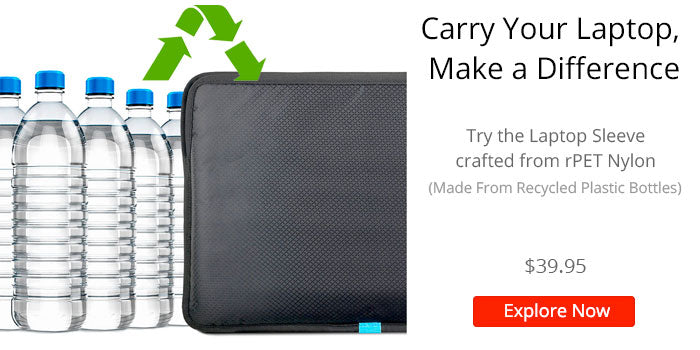
Our rPET nylon is made from recycled plastic bottles, which is a meaningful distinction from virgin nylon that carries an environmental cost of its own. If sustainability is part of your decision, verify what you're actually buying.
Felt: The Material to Avoid
Felt sleeves look minimal and photograph well. In practice, they offer almost no structural protection. Felt compresses under pressure and provides little resistance to impact. They also absorb moisture rather than repelling it, which means a felt sleeve in a wet bag is a problem. MacCase has never made a felt sleeve, and the reason is straightforward: it doesn't perform well enough to justify the trade-offs. If you're drawn to the minimal aesthetic, a slim nylon sleeve achieves the same look with meaningfully better protection.
Leather: When It's the Right Call
Leather is the right choice when you're buying for the long term and the sleeve will be used in controlled, professional environments. A well-made premium leather sleeve develops a patina with use. It doesn't degrade, it evolves. For users who want an object that improves over time and reflects the quality of the laptop it's protecting, leather is the answer. But the leather category has a serious problem: most of what's sold as leather isn't.
Bonded leather is ground-up leather remnants mixed with vinyl, plastic, and adhesive, pressed into sheets and cut into panels. It feels like plastic because it largely is. It cracks and peels within two years, usually starting at the corners and edges where flex stress is highest. "Genuine leather" is the industry's lowest grade of real leather. Technically accurate, practically misleading.
The distinction that matters is full-grain or top-grain leather, vegetable-tanned, from ethically sourced hides. This is the category of leather chosen because it's both durable and develops character with use. It's also significantly more expensive to source and work with, which is why most brands avoid it. When evaluating a leather sleeve, the warranty is the clearest signal: a lifetime warranty on a leather product means the manufacturer is confident the material won't fail. A 90-day or even a one-year warranty on a "leather" sleeve tells you everything you need to know about the quality of the material.

What are the Best Materials for a Laptop Sleeve?
Exterior material is only one of three material decisions that determine how well a sleeve protects your laptop. The foam padding determines how much impact energy is absorbed before it reaches the device. High-density foam maintains its protective properties for years, while cheap foam compresses quickly and stops doing its job. The interior liner determines whether the sleeve protects the laptop finish or slowly abrades it. A soft velvet or microfiber liner is essential, particularly for aluminum finishes that show contact marks.
Most buyers evaluate the exterior and ignore the other two. A sleeve with a premium leather exterior and inadequate foam padding is a worse protection choice than a nylon sleeve with proper layered foam construction. Evaluate all three before deciding.
How to Choose The Best Material for a Laptop Sleeve
If you're protecting a premium laptop like a MacBook, Dell XPS, HP Spectre, Lenovo ThinkPad, or Microsoft Surface, the sleeve should match the laptop's quality. A $15 sleeve on a $2,000 laptop is a false economy. The question isn't which material looks best. It's which material, built to what construction standard, will actually protect your investment over the time you plan to own it.
For most professional users, the answer is either a well-constructed nylon sleeve for daily commuting and travel, or a full-grain leather sleeve for office and professional use with the understanding that the construction quality matters as much as the material choice.
Confused about which laptop sleeve is right for you? Check the MacCase Buyer's Guide.
About Michael Santoro
With over three decades of experience at the highest levels of design, Michael Santoro built a career defined by innovation, timelessness, and mentorship. From award-winning designs for Chrysler to his groundbreaking creation of the Apple-specific case market with MacCase, his work spans industries and institutions. He also mentors aspiring artists and designers around the world through his tutoring programs at Art College Prep. Learn more about his work at Michael Santoro Design.
