


Is it OK to Put a MacBook in a Backpack?
Updated - September 2026
The decision to stow your MacBook in a backpack might seem straightforward, but the implications of that choice can be profound.
The safety and longevity of your precious device hinge on the type of backpack you choose: a generic, one-size-fits-all bag or a dedicated MacBook backpack meticulously designed to cradle your laptop.
It doesn't matter whether you're looking at using a generic bookbag, a MacBook 13 backpack, a MacBook Pro 14 backpack, a 15-inch MacBook backpack or a backpack for a MacBook Pro 16, your goal is the same: To safely transport your expensive Apple laptop.
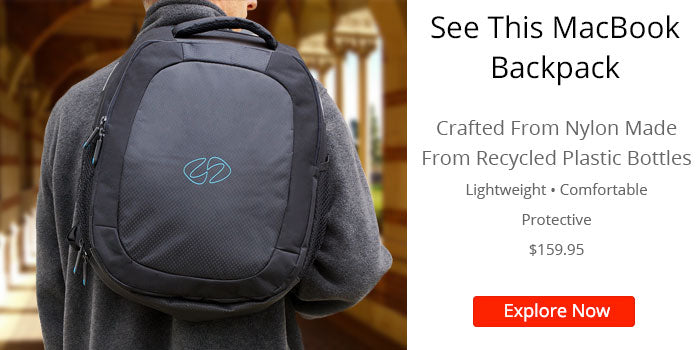
MacBooks and Backpacks
Many people don't realize how fragile an Apple laptop can be. If they've been using a general use pack with little to no padding and then purchase a MacBook thinking they can throw the laptop in the same pack without consequences, they might be setting themselves up for an expensive lesson.
Bending due to lack of a supporting structure, dents due to lack of padding, abrasion and scratches due to lack of a dedicated built-in sleeve and accessory pockets are all the result of trying to carry a MacBook in a general use backpack.
Putting Your MacBook in a General Use Backpack
Let's delve into the comparison to understand the stark differences and why opting for a MacBook-specific backpack is not just a choice but a necessity.
Minimal Protection
When you entrust your MacBook to a generic backpack, you're essentially putting it in an environment that's not designed to shield it from the rigors of the outside world or the world inside the pack itself. The absence of a padded and lined sleeve compartment to protect your Apple portable leaves your laptop vulnerable to impacts, abrasions, and scratches.
Compression Risks
Generic backpacks are often cavernous, accommodating a myriad of items. However, this spaciousness can turn into a liability. The compression from other items can exert undue pressure on your Mac, potentially leading to a warped chassis, malfunctioning keys, or, worst-case scenario, data loss. Considering the repair costs and loss of value come resale or upgrade time, choosing a generic pack to carry your Apple laptop can end in a financial disaster.
Thermal Challenges
Your MacBook needs to breathe, especially when it comes to managing heat. Placing it in a non-breathable generic backpack can turn the device into a makeshift oven. Overheating is a real risk, causing fans to go into overdrive, and battery life to plummet.
Comfort Quandary
Comfort is often an overlooked aspect. Generic backpacks lack the specialized design needed to distribute the weight evenly. Carrying your MacBook in such a pack can be uncomfortable, leading to unnecessary strain on your shoulders and back.
Overall Quality
An Apple laptop is a very expensive choice when compared to similar PC options. Choosing a low-price, low-quality pack to carry it around in speaks to being "penny wise and pound foolish".
Just as you would not park a luxury car in a garage made from cardboard boxes and held together with duct tape, you want to transport and protect your Mac in a backpack that is as well designed as the laptop itself.
[ Explore MacBook Backpacks → ]

What 28 Years of Watching People Carry Apple Laptops Taught Us
MacCase created the world's first Apple-specific backpack. Before that product existed, Apple owners were putting their PowerBooks and iBooks into generic book bags and gym duffles with predictable results. The damage patterns we saw in those early years were consistent.
• Bent chassis from compression.
• Abraded exterior surfaces from zipper contact.
• Overheated logic boards from bags with no ventilation structure.
• Damaged ports full or dust, dirt and other debris.
None of these failures were random. They were the direct result of putting a precision device into a container that was never designed to hold one.
The thermal problem is worth understanding in detail.
Understanding Heat Build Up
A MacBook generates heat during normal operation and relies on airflow and its own case structure to manage it. A generic backpack traps that heat. When the laptop is packed against clothing, books, or a water bottle with no breathable rear panel between the machine and the pack, temperatures climb. Fans run longer and harder. Over time, repeated thermal stress accelerates battery degradation and shortens the lifespan of internal components.
Understanding Compression
The compression problem is less visible but equally damaging. A generic pack with no structure applies pressure unevenly across the chassis as the bag fills. The MacBook Pro chassis is rigid but not infinitely so. Sustained lateral pressure from overpacked bags has been documented to warp trackpad response and in extreme cases to crack the display housing at the hinge points.
Understanding Zipper Abrasion
Zipper abrasion is the most immediate damage risk. Pulling your MacBook in and out of the pack several times a day over a plastic of metal zipper will scratch the aluminum exterior finish permanently within a few weeks of daily use, diminishing resale value.
MacCase Solved These Problems
We designed MacCase backpacks specifically to eliminate each of these failure modes.
• MacCase uses a fully-structured rear panel that prevents chassis bend.
• Our tilt-away main compartment opening, which MacCase pioneered, allows the opening to fold away from the built-in sleeve providing clear, unencumbered egress and ingress.
• Our built-in sleeve covers about 70% of the laptop allowing cool air to circulate down, and hot air up and out so the machine can cool naturally after use.
• The built-in sleeve keeps dust and debris from entering the ports.
MacCase also introduced the world's first modular laptop backpack in 2001 and the world's first Apple-specific laptop sling bag four years later. Each design decision came from watching what actually damages Apple portables in real-world carry situations, not from following what other bag companies were doing. The question is not really whether it is okay to put a MacBook in a backpack. It is whether the backpack you are using was designed with any knowledge of what a MacBook actually needs.
[ Explore MacBook Backpacks → ]

Put Your MacBook in the Right Backpack
A MacBook holds its resale value better than any other laptop on the market. A three-year-old MacBook Pro in excellent condition sells for a significantly higher percentage of its original price than a comparable Windows machine. That resale premium is real money, and it is entirely dependent on the physical condition of the device.
A generic backpack is the single fastest way to destroy that resale value. A scratched front and rear panel from zipper abrasion over 3 years, one pressure crack at the hinge from an over-packed bag, one episode of sustained thermal stress that degrades the battery below 80 percent capacity, and the resale story changes.
Buyers notice.
They discount accordingly.
28 Years of Proven Design Solutions
MacCase has been engineering Apple-specific carry solutions since 1998, longer than any other brand in this market. The tilt-away compartment opening, the structured rear panel, design as a security feature, none of these were design exercises. They were answers to specific failure modes we observed over decades of watching how people carry and damage Apple portables.
Choosing a MacCase backpack is not a premium purchase relative to what it protects. A MacBook is a $1,500 to $3,000 device with documented resale value that holds for years. The bag that carries it should reflect that. Cheap carry is expensive in the long run.
If you want to understand how MacCase approaches each of these protection problems in detail, the MacCase Product Features and Systems page covers the engineering behind the carry system. The MacCase Buyer's Guide can help you find the right model for your MacBook size and carry habits.
[ Explore MacBook Backpacks → ]
Watch How to Carry Your MacBook and Make a Difference
Further Reading
• How to Safely Carry a MacBook in a Backpack
• What's Better A Backpack or a Messenger Bag?
• What Size Laptop Can Fit in a Backpack?
About Michael Santoro
The illustrious professional life of Michael Santoro has been defined by his commitment to innovation and creating timeless design. His impactful contributions include earning multiple awards for his design work at Chrysler and creating the Apple-specific case market through MacCase. He is also dedicated to mentoring new creative talent through his tutoring programs at Art College Prep and How to Draw Cars. Learn more about his work at Michael Santoro Design.
